
The recent withdrawal of the US from the United Nations Framework Convention on Climate Change (UNFCCC), the Intergovernmental Panel on Climate Change (IPCC), and other international organizations in January 2026, was preceded by the decision in COP30 Belém to have rights-based and people-centred approach to the Just Transition Mechanism in October 2025.
The US exit from the UNFCCC, the primary global treaty on climate will take full effect in a year’s time. The new attempt to define and revive a Just Transition mechanism, without US interference is considered hopeful, especially since it is linked to the Belém Action Mechanism” (BAM), an initiative which attempts to foster international cooperation, technical assistance, and capacity-building to ensure an orderly shift away from fossil fuels, and has been strongly supported by civil society and activists.
However, the new Just Transition Mechanism faces a fundamental problem: the historical conditions that made both its conception and implementation conceivable have now become obsolete. The UNFCCC bureaucracy has long operated on the pretence that imperialism does not exist, but it is now confronted with a reality in which neoliberalism has collapsed and US-led imperialism has re-emerged in an overtly militarised and increasingly fascistic form.
Neoliberalism no longer merely shortens life expectancy; it is now accelerating death rates globally through active war and warfare (see Kadri 2023). This shift is also reshaping the modalities of imperialism itself. US-led trade de-globalisation (through tariffs and EU protectionism) now coincides with a deepening of financial imperialism, marked by escalating sovereign debt crises, financial engineering, and the rapid expansion of private credit. As C.P Chandrasekhar notes, one of the likely scenario of this is that the world economy on the whole will not even have an escape route to ameliorate economic hardship and move towards a viable recovery.
In this context, the central question becomes what kind of “Just Transition” is even possible. More fundamentally, what would a genuinely people-centred Just Transition mean under these conditions?
Flawed green new deals
Remembering that the current global order began with the Palestinian genocide also clarifies the deep ambivalence within much of the Western world toward recognising genocide as ecocide. This ambivalence has not emerged in a vacuum. It is closely connected to a series of technocratic, reformist economic responses to the climate crisis that reduce workers to mere ‘labour markets’ and instruments for boosting ‘productivity’, while systematically obscuring class relations, class power, and material inequalities.
Good examples include the various iterations of Western Green New Deals, modelled in soft replication of the Marshall Plan. An obvious omission of this literature is that the Marshall Plan wasn’t simply a transfer of capital from the US to Europe but designed as a bulwark against communism and implemented at the expense of the Global South. As history demonstrates, imperialism operates through persistent capital transfers from the Global South to the Global North. Utsa Patnaik’s methodological analysis of this colonial drain is illustrative of a reverse Marshall Plan that entrenches global inequality rather than alleviating it.

By omitting both the foundational role of the Marshall Plan and the extractive mechanics of imperialism, economists and technocrats have been able to frame the Green New Deal primarily around questions of financing; in effect treating the climate crisis as a problem of allocating funds or ‘greening’ and ostensibly techno-neutral forms of industrial policy, whilst leaving underlying relations of extraction and power unexamined (for an alternative see Ajl 2020).
This academic and policy stalemate was reproduced in debates that bifurcated the question of industrial policy itself. On one side, industrial policy was framed as centred on production and manufacturing; on the other, as a services-led development strategy. What was conspicuously absent from both positions was any serious engagement with imperialist extraction or with the historical role of the Marshall Plan, as Green New Deal frameworks remained narrowly focused on industrial policy within Western economies, accompanied by a simplified and depoliticised reading of the East Asian ‘miracle states’. In treating imperialism as a peripheral negative externality rather than a constitutive structure, these debates also failed to reckon with the social reality of the Global South, where large proportions of the population remain peasants, landless labourers, or informal workers. Fetishising either production or services as engines of growth and poverty alleviation through productive investment cannot operate structurally within an all-pervasive and increasingly violent imperial order. More importantly, the underlying rubric of such debates lies in the flawed assumptions of ‘productivity’. As Jayati Ghosh details, these assumptions remain the holy grail of mainstream economics even as they are without due investigation.
Without expanding further, the central claim is that the presence or absence of a ‘green’ industrial policy is neither the cause of, nor a solution to, the climate crisis and de-development in the Global South. Additionally, this literature doesn’t address the nature and direction of industrial policy in its compliance to the role of law and regulation in enforcing the ‘bankability’ of projects in the Global South (See Tan 2022). Industrial policy cannot contain the volatile and unproductive nature of contemporary capitalist accumulation, in fact for it to operate as conceived, it must align with a such a system on more than one level. This academic and policy impasse has become even more obsolete under the current reality of monopoly capital waging permanent war.
The current military contagion in the Global South
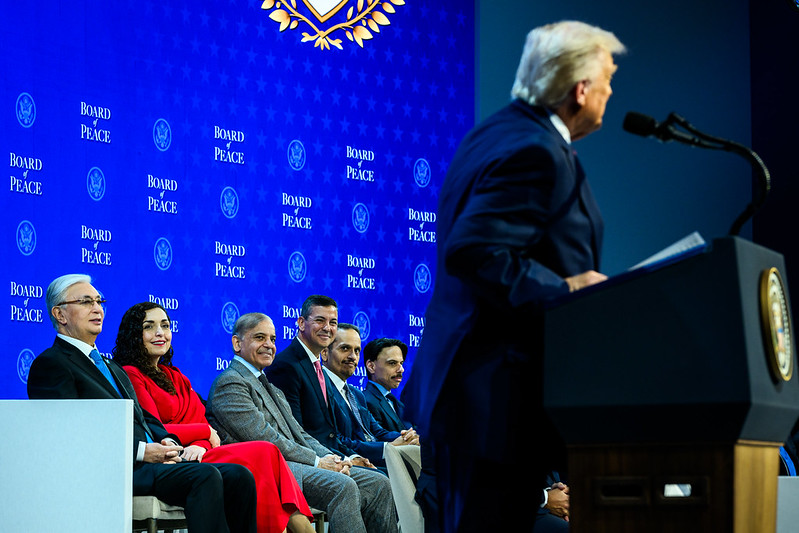
The impunity of Global North polluters, the chronic maldistribution of resources and finance, and the absence of climate reparations are no longer the sole drivers of the climate catastrophe. Contemporary drivers are now accelerating through the expansion of the global arms race, in which Global South countries are becoming increasingly active participants. Pakistan exemplifies this dynamic. In recent months, Pakistan has exported military aircraft and materiel to Libya, Saudi Arabia, and Sudan, while attracting interest from additional buyers including Iraq, Bangladesh, and Indonesia. Although Pakistan operates a relatively sophisticated, state-led defence value chain with Chinese support, this expansion is not driven by a simple profit motive. Rather, it reflects the shifting allegiances and interests of domestic capitalist elites. This trajectory bodes poorly for both the population and the climate. An investment boom in military exports does not translate into broad-based economic development; for a debt-ridden country such as Pakistan, it instead requires substantial upfront investment and the diversion of scarce resources away from social and productive sectors. The 2022 floods alone caused an estimated $30 billion in damages, and such disasters have now become a recurring reality. US imperialism is therefore not only entrenching militarism and fascism globally, but actively deepening these dynamics within the Global South, accelerating the structural rift between the state and the masses. In Pakistan’s case, its participation in the Board of Peace stands in direct contradiction to its foundational identity as a confessional state, an identity historically grounded in the rejection of Israeli statehood
An equally important facet of dependent policy making is how the Global South arms race is directly tethered to their compliance with US tariffs regime. The mandated purchase of US-made Boeing aircraft has been written into bilateral trade agreements with a range of countries, including Cambodia, Vietnam, Malaysia, and Bangladesh. The recent revelation that Vietnam was preparing for US military attack since 2024, but in 2025 went onto to sign an 8 million USD Boeing deal with the US is not surprising. No country is excluded from US aggression; however, all countries are forced into varieties and degrees of compliance and subjugation. Beyond the Global South, US threats to invade Greenland, if realised, would cannibalise NATO.
A shaky nuclear non-proliferation treaty vs. Global South fossil fuel subsides
The turn toward military exports is not the only outcome of US imperialism in the Global South. US and Israeli attacks on Iran have also precipitated a renewed global reckoning with nuclear power and nuclear deterrence. While the Nuclear Non-Proliferation Treaty (NPT) presents itself as a universal framework for peace and stability, it in fact operates as a form of strategic technology governance analogous to the WTO/TRIPS regime and the Global North investor-friendly Energy Charter Treaty. By legally freezing access to nuclear weapons technology within a small group of states that had already acquired it by 1967, the NPT institutionalises a permanent hierarchy of technological entitlement, legitimising possession and modernisation by nuclear-weapon states while prohibiting acquisition by all others, irrespective of their security conditions or historical exposure to intervention and coercion (countries which did not sign NPT in 1967 include India, Pakistan and Israel, whereas North Korea repudiated it in 2003).
This is not to deny the formal universality of the NPT as a legal instrument, but to highlight the materially unequal enforcement and structural asymmetries through which nuclear legitimacy, compliance, and sanction are applied. In practice, the treaty functions less as a pathway toward disarmament than as a technology-control mechanism that preserves Global North military dominance in much the same way that intellectual property regimes restrict industrial and technological development in the Global South.
This asymmetry is particularly visible in the case of Iran. Despite being a signatory to the NPT and subject to extensive verification and inspection regimes, Iran has faced sanctions, covert sabotage, and direct military attacks, while non-signatory nuclear states aligned with the US remain insulated from scrutiny or sanction. Under these conditions, nuclear capability is increasingly framed by Global South states not as an instrument of aggression, but as a deterrent against a long historical pattern of invasion, regime change, and resource extraction enforced through imperial power.

Against this backdrop, it is neither alarmist nor speculative to reconsider what a “just transition” can plausibly mean in a world that is once again approaching strategic conditions analogous to the Cuban Missile Crisis. As monopoly finance retreats from even nominal net-zero commitments and global politics shifts toward renewed doctrines of mutually assured destruction, the Global North’s insistence that Global South emissions be eradicated appears increasingly incoherent. Demands for the removal of carbon subsidies in Global South states exemplify this contradiction; they impose ecological restraint on societies simultaneously subjected to militarisation, energy insecurity, and structural underdevelopment governed through asymmetrical legal and economic regimes.
The blanket ban on subsidies, including fossil and carbon subsidies fails to account for the inflationary impact of their removal on Global South economies. This is because a removal of subsidies in the present reality of capital transfers to the rich (in the name of attracting investment) including through corporate subsidies as well as lax and inadequate corporate tax rates is borne directly by the ordinary people of the Global South. Fossil fuel subsidies are directly linked to basic needs of electrification, transport and food prices. A removal of such subsidies without the concurrent amelioration of capital transfers to domestic and international corporations as well other rich capitalist classes, will lead to reduced consumption of ordinary people and a fall in demand. As Prabhat Patnaik, explains this phenomenon in the domestic context of India, such capital transfers will lead to fall in profit of the domestic national private sector and the smaller capitalist classes since their investment is contingent on the incomes of ordinary people, however, this will not impact domestic monopoly capitalists, rather increase their monopoly as they are often the major holders of energy subsidies. This transfer of capital is even more pronounced in the case of international monopoly capitalists, who reside in the Global North, remain heavily subsidized by Global North governments and also have significant shares in Global South companies. The US alone subsidises its fossil fuel industry to the tune of USD 30.8 billion annually.
The mainstream mantra of cutting carbon and fossil fuel subsidies in the Global South is only viable and meaningful when integrated with a removal of such subsidies in the Global North and an increase in progressive taxation in the domestic and international context, and only in the event that such taxation is reinvested in Global South economies.
What then is an anti-imperialist people’s just transition?
It is therefore unsurprising that the rigid apparatus of UN climate bureaucracy; capable of debating for months on how to name and define aspects of human emancipation and environmental protection while systematically refusing to name imperialism, has neither delivered on climate goals nor empowered sovereign states to resist imperial domination. In this sense, the Gaza Board of Peace replaces nothing; it merely recentralises the United States and its client states within a different institutional platform. It is also important to remember that even the new debate on Just Transition do not include sanctioned or ‘pariah’ countries such as Venezuela, Iran, Cuba and North Korea. A major reality of the world is therefore not even reflected in the debates and discussions within the UN-related sphere.
What is certain is that goal of an anti-imperialist Just Transition manifests every day in the struggle of indigenous people, in the struggles of the peasant movement, radical feminists and grassroots activists against imperialism, big capital and settler colonialism. The question then is how to replicate, join and amplify the momentum of these existing movements. The planetary crisis shows that de-linking from the Western imperialist order, through the formation of an economic bloc of Global South countries can empower those countries but it cannot destroy the drivers of imperialist ecocide in the West. An anti-imperialist Just Transition then would be a transition for survival, which also works to dismantle the current iterations of genocidal imperialism in the West.
Farwa Sial is a political economist with expertise in development and climate finance, industrial policy, and private sector accumulation in the Global South. Farwa is also a Research Associate at the Department of Economics, at the School of Oriental and African Studies (SOAS), London. She has ten years of academic research, teaching, and policy experience in various multilateral forums.
Disclaimer: This story is auto-aggregated by a computer program and has not been created or edited by budgetbuddy.
Publisher: Source link
Publisher: Source link