

Optimizing your website speed for AI visibility is now the #1 most critical factor for getting traffic (and customers) to your website as the Internet shifts toward AI-driven discovery. The way people find your business online just changed forever.
Right now, millions of people are ditching traditional search engines like Google for AI chat platforms like ChatGPT, Claude, Perplexity, and evolving features such as Google’s AI Overviews. These platforms deliver zero-click search results, answering questions directly, which means people are getting solutions without ever clicking a link or visiting your website. Watch more:
Whether these AI models recommend your business or your competitor depends heavily on one overlooked factor: your website speed, one of the essential technical foundations for the modern web.
I’ve spent months obsessing over the data, and I’ve even moved my own sites to faster hosting to stay ahead of this shift. This isn’t just about SEO anymore; it’s about being visible in an AI-driven world.
Key Takeaways About Website Speed and AI Visibility
- Search is Shifting: AI chat tools are replacing standard search results, making visibility harder than ever.
- Website Speed is Visibility: AI crawlers will skip slow websites and cite faster competitors instead.
- Conversions Matter: Even a 0.1-second improvement in load time can significantly boost your revenue.
- Hosting is the Foundation: Your server hardware is the single biggest factor in your site performance.
Get My #1 Pick for Fast Web Hosting: ScalaHosting

ScalaHosting is my top choice for fast, reliable web hosting for small business websites. They’ve been around for decades, are independently owned, and will have your website running on the fastest hardware in the industry.
AI Chat Tools Are Replacing Traditional Google Search: Here’s Why
We’re witnessing a massive decline in how often people use standard search bars. AI platforms, powered by natural language processing, interpret search intent to provide one or two direct answers instead of a list of ten blue links.
This shift in brand visibility strategies means that if you aren’t the primary answer the AI provides, you’re essentially invisible. There’s no visiting your website if the AI doesn’t think your data is worth citing.
Achieving horizontal visibility across various AI platforms is now crucial.
This isn’t just a trend; it’s a structural change in the internet. The research firm Gartner predicts that traditional search engine volume will drop 25% by the end of 2026. That’s a quarter of all Google searches gone in just a couple of years.
Think about it… how has your own search behavior changed? Instead of typing “project management software,” you’d ask, “What’s the best project management tool for a small team?“
When someone asks for a “good hosting provider for my e-commerce store,” AI models like ChatGPT make a judgment call based on search intent. It picks the most reliable, fastest-loading information it can find.
What is Generative Engine Optimization (GEO)?
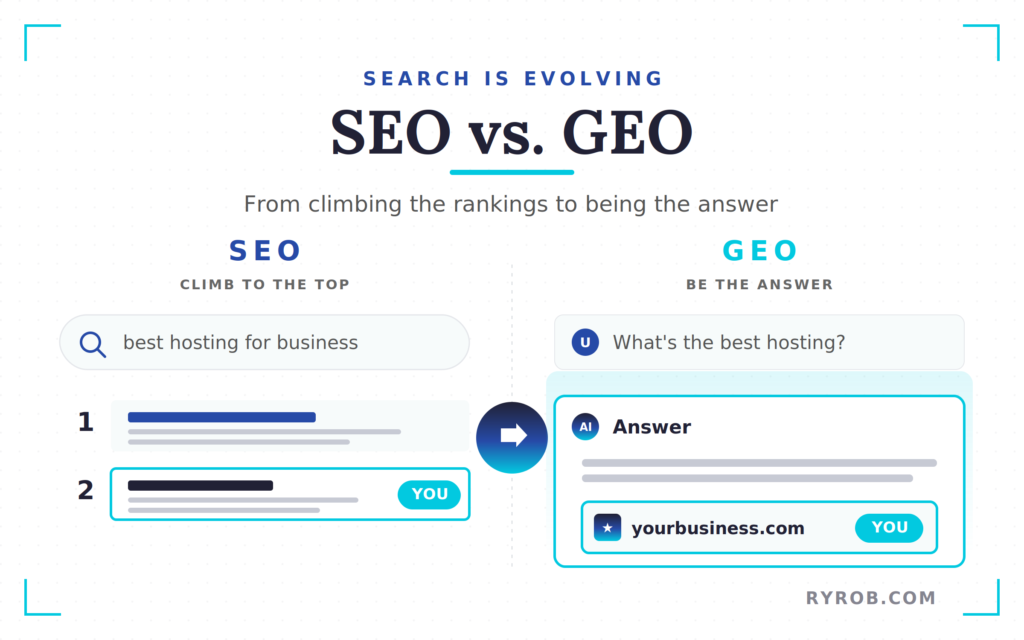
We all know SEO, but Generative Engine Optimization (GEO) is the next frontier for being found online. While SEO was about climbing to the top of page one, GEO is about becoming the specific answer an AI gives to a customer.
AI systems crawl your site and decide if your business is credible enough to be cited as the solution. Adding Schema markup and structured data markup helps automated search engines parse your information quickly for better visibility.
Why AI Search Crawlers Depend on Website Speed
Speed matters for GEO because AI crawlers work in real-time. When a tool like Perplexity builds an answer through retrieval augmented generation, it sends bots to gather information.
If your site is slow, the AI literally can’t get the data in time. It’ll skip your content and use a faster competitor’s site instead. This makes website speed ai search ranking a direct factor in your online success.
- The AI receives a user prompt.
- It sends out crawlers to find the best, most recent data.
- The bot hits your server; if it doesn’t respond instantly, the bot moves on.
Your server response time, or TTFB, is the most critical metric here.
This is the delay between a request and the first tiny bit of data arriving. Many business sites have a TTFB of 500ms or higher, which can cause AI crawlers to time out.
To combat this challenge, I shored up my own sites with ultra-fast web hosting. By switching to ScalaHosting, my global TTFB dropped from 100ms to 50ms.
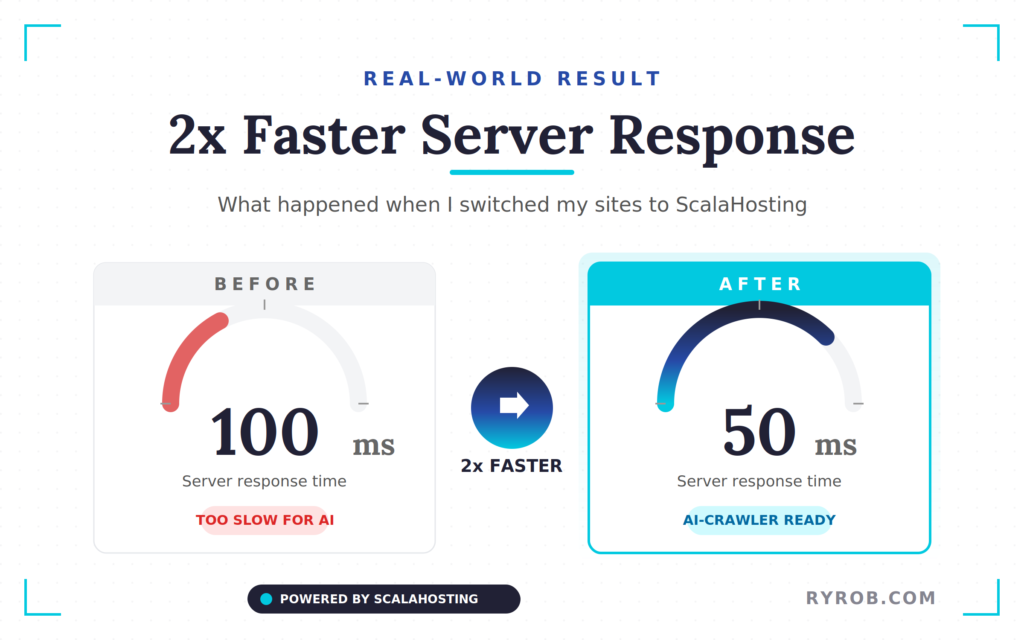
This ensures that an AI crawler gets my content instantly.
It’s the difference between being the source of truth for an AI or being completely ignored.
AI Learns from What Humans Trust
AI models are trained on human behavior and key user experience signals like dwell time and bounce rate.
They prioritize sites with low bounce rates and high engagement. If your site is fast, users stay longer, which sends strong user experience signals to AI that your content aligns with E-E-A-T principles and demonstrates authoritative content.
A professional-grade site must perform like one to build that trust. Using essential tips for faster website performance ensures you’re sending the right signals to both humans and machines.
Data Behind Why Website Speed Impacts AI Visibility & Conversions
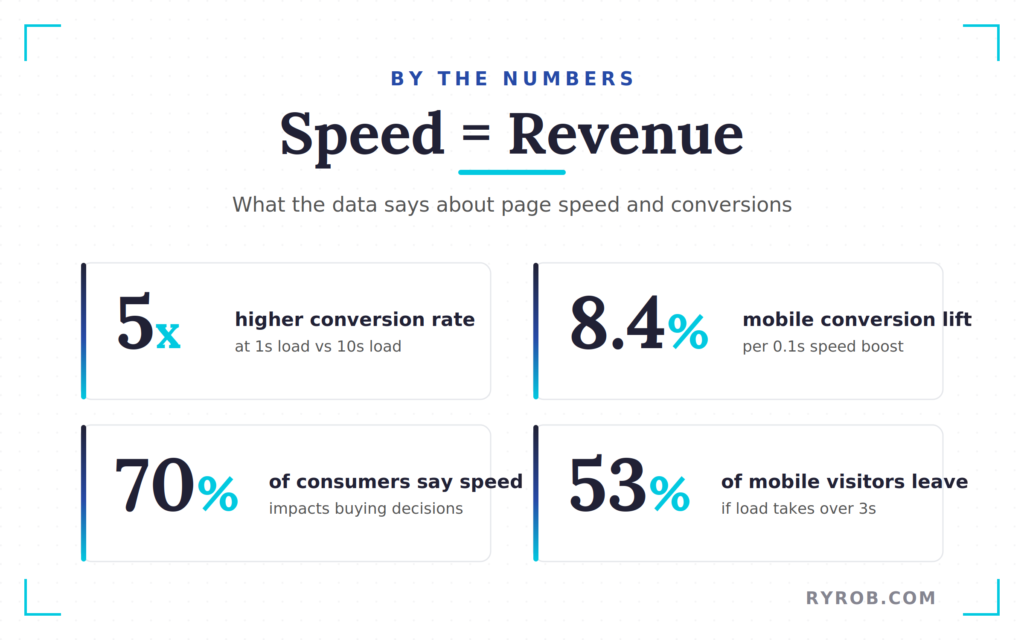
The data linking Core Web Vitals to revenue is undeniable. Speed isn’t just a technical metric anymore; it’s now a direct driver of your bottom line in the age of AI.
- A site loading in 1 second converts at 5x the rate of one loading in 10 seconds.
- A 0.1-second improvement in mobile speed, boosting mobile responsiveness, can increase retail conversions by 8.4%.
- 70% of consumers admit that page speed impacts their willingness to buy.
- 53% of mobile visitors will leave a page if it takes more than 3 seconds to load.
These stats from Page Load Time and Conversion Rates show that even tiny delays cost billions in lost revenue annually. Speed drove featured snippets in old-school SEO; now it powers AI citations and visibility.
3 Factors That Control Website Speed & AI Visibility
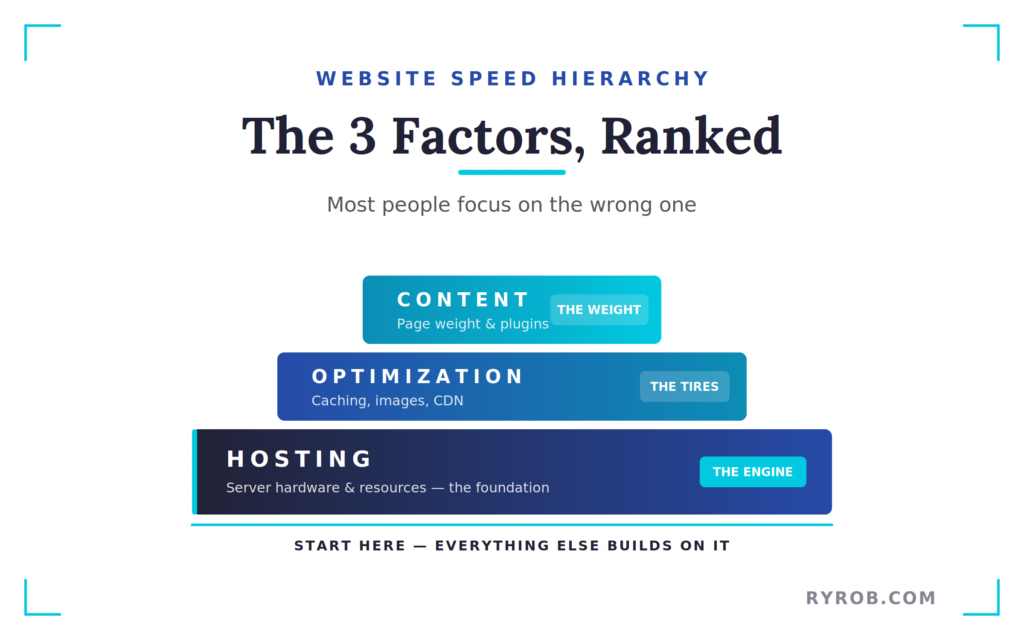
Most business owners focus on the wrong things when trying to speed up their sites. There’s a specific hierarchy you should follow, especially with mobile-first indexing, where nailing your hosting and content weight proves critical for modern search rankings.
- Hosting: This is your engine.
- Optimization: These are the tires and tuning.
- Content: This is the weight of the car.
Let’s dive in and explore each of these factors.
Factor #1: Hosting: The Foundation of Website Speed AI Search Ranking
Your hosting is the single biggest factor overlooked by business owners. It forms the technical foundations of your site’s performance.
It doesn’t matter how much you optimize your images if your server uses outdated hardware or shares resources with hundreds of other sites. Your choice in web hosting affects your website load speed more than any plugin ever will.
Factor #2: Site Optimization Tweaks
Once your foundation of fast web hosting is solid, you can look at caching plugins, image compression, and your content delivery network.
Check out my full PageSpeed optimization guide for more help, but even this can’t fix a slow server.
Factor #3: Content and Plugins
You have direct control over your page weight. Avoiding bloated page builders and excessive plugins is important, but you must fix your hosting first before these changes have a real impact. Check out my picks of the top WordPress plugins for my optimization stack.
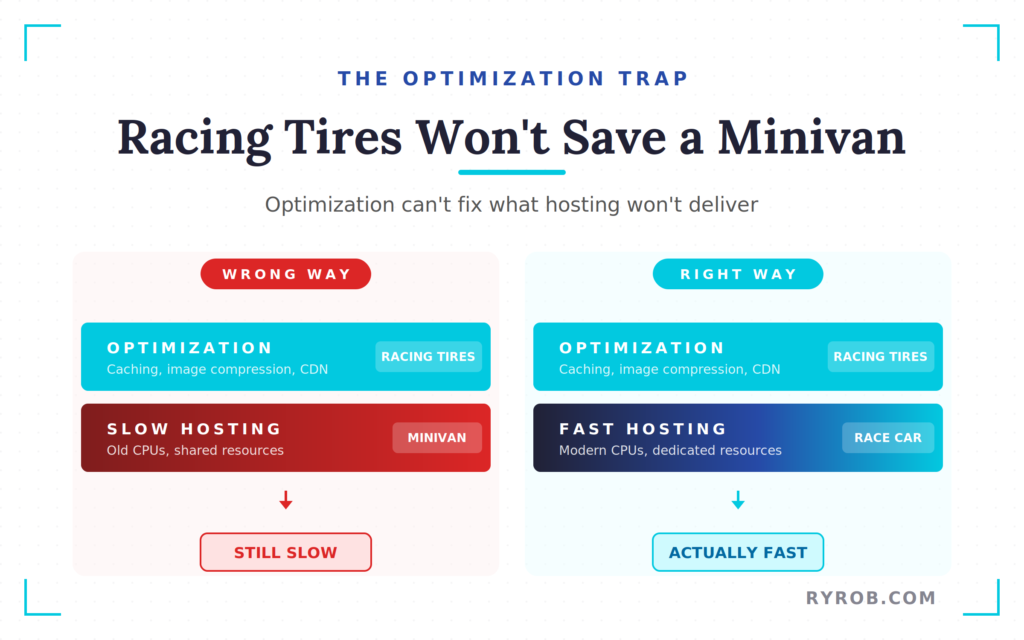
Optimizing your content while using bad hosting is like putting racing tires on a minivan. It might look better, but it’s still not going to win a race. You need the right engine under the hood first.
How High-Performance Hosting Improves Website Speed & AI Visibility
I switched because of the hardware. Many big-name hosts use processors from over a decade ago. ScalaHosting uses honest, no-BS cloud hosting that prioritizes modern technology.
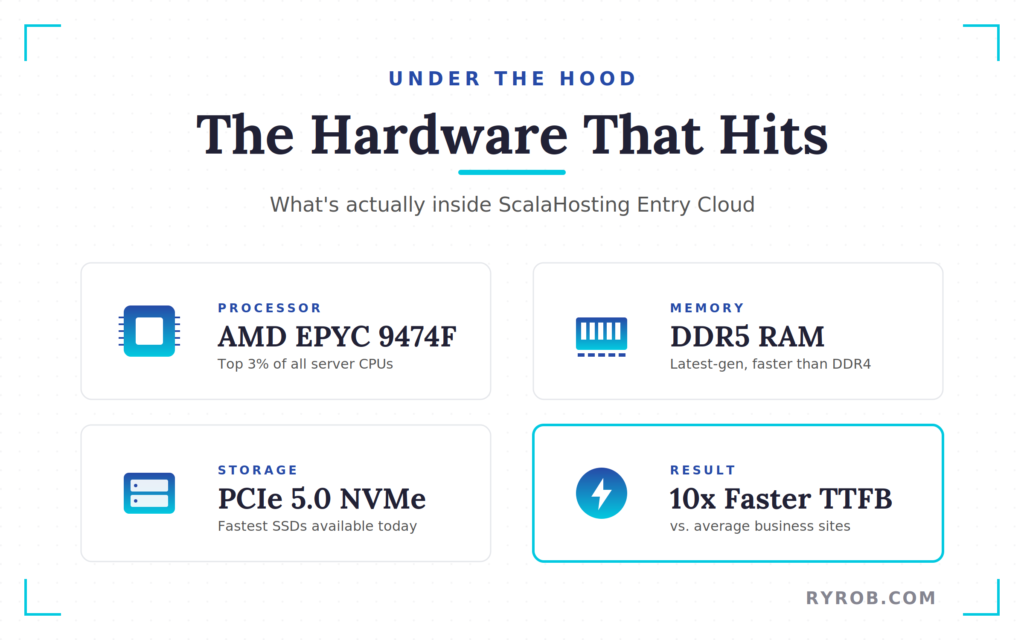
This is crucial for website speed and AI visibility, which boosts brand visibility and ensures your authoritative content gets seen by AI engines.
ScalaHosting’s Top-Tier Hardware Specs:
- AMD EPYC 9474F CPUs: Ranked in the top 3% for server performance.
- DDR5 RAM and PCIe 5.0 NVMe SSDs: The fastest storage available today.
- 10x Faster TTFB: My server response is exponentially faster than the average business site.
Scala’s Entry Cloud plan starts at $14.95/mo. For that price, you get 2 dedicated CPU cores and 2GB of RAM. These resources are yours alone, unlike the shared plans at GoDaddy or Bluehost where you’re fighting for power with 500 other sites.
It also includes SShield security, which blocks 99.998% of attacks.
Beyond just the raw speed, there are a few features that make managed cloud hosting worth it, especially for small businesses tackling vertical competition from bigger players with better tech.
- Scala built their own control panel called SPanel: It’s free and uses half the resources that traditional cPanel does. That means more of the hardware you pay for goes toward your site instead of the administrative software, boosting your share of voice where speed counts most.
- Real Human Support 24/7: In an age where everyone is moving to AI chatbots, Scala keeps things human. They have experts available 24/7 with a 30-second response time on live chat. If your site goes down at 2 a.m., you need a person, not a bot, to get back online fast for automated search engines.
- Independently Owned by Founders: Being independently owned is rare in this industry. Most hosts get bought by private equity, and the service usually declines. Scala is still run by its original founders, keeping their focus on performance and service.
3 Action Steps to Fix Your Website Speed Today
- Test your site: Use PageSpeed Insights to check your Core Web Vitals. Prioritize Core Web Vitals on mobile, since failing them costs you money and hurts visibility.
- Audit your hosting: Find out if you’re on a shared plan and what CPUs they use. Include a technical review for Schema markup to unlock rich results, aligning with authoritative content standards.
- Make the switch: If you’re on a slow, big-name host, consider moving to a plan with dedicated resources like Scala’s Entry Cloud.
FAQs About Website Speed and AI Visibility
Here are some of the most commonly asked questions I get about website speed and it’s impact on AI visibility.
Does website speed really affect AI answers?
Yes. AI crawlers work in real-time. If your server is slow to respond, the bot will time out and select information from a faster-loading competitor to build its answer, making a solid website speed ai search ranking essential.
Is shared hosting bad for AI visibility?
Shared hosting often means your site’s performance fluctuates based on other sites’ traffic. For consistent AI visibility and a better website speed ai search ranking, dedicated resources are much more reliable.
How does website speed support semantic search optimization?
Fast loading times help AI models access and cite your content reliably, filling citation gaps where slower sites fall short, while boosting key user experience signals that improve your website speed ai search ranking.
How can I test my Time to First Byte (TTFB)?
You can use tools like PageSpeed Insights or GTmetrix. Ideally, you want a TTFB under 100ms for the best performance and a competitive website speed ai search ranking.
Final Takeaways on Website Speed and AI Visibility

The transition to AI search isn’t coming; it’s already here. Improving your website speed ai search ranking is the new standard for business success.
By building a fast foundation today, you’re ensuring your business remains visible in AI Overviews in 2026 and beyond. Website speed is essential for higher AI visibility, and staying ahead of the competition. It’s time to prioritize this one.
Get My #1 Pick for Fast Web Hosting: ScalaHosting
ScalaHosting is my top choice for fast, reliable web hosting for small business websites. They’ve been around for decades, are independently owned, and will have your website running on the fastest hardware in the industry.
Disclaimer: This story is auto-aggregated by a computer program and has not been created or edited by budgetbuddy.
Publisher: Source link
Publisher: Source link