
most systems assume portable equipment location
Across customer deployments supporting mining operations in Queensland, heavy machinery buckets move between sites based on shifting production schedules. Along Alaska’s North Slope, generators are staged in remote environments where redeployment depends on weather, access, and drilling timelines. In equipment yards across Georgia and Mississippi, trailers circulate between branches and jobsites to support active rental and construction demand. In West Texas, trash assets and rental lifts rotate continuously between customers, often changing locations multiple times within a single month.
These examples reflect real operational patterns observed across thousands of portable assets deployed in oil and gas, construction, mining, waste, rail, and industrial equipment rental environments. They are not exceptions. They are the normal operating rhythm of industries where equipment must move constantly to support the work.
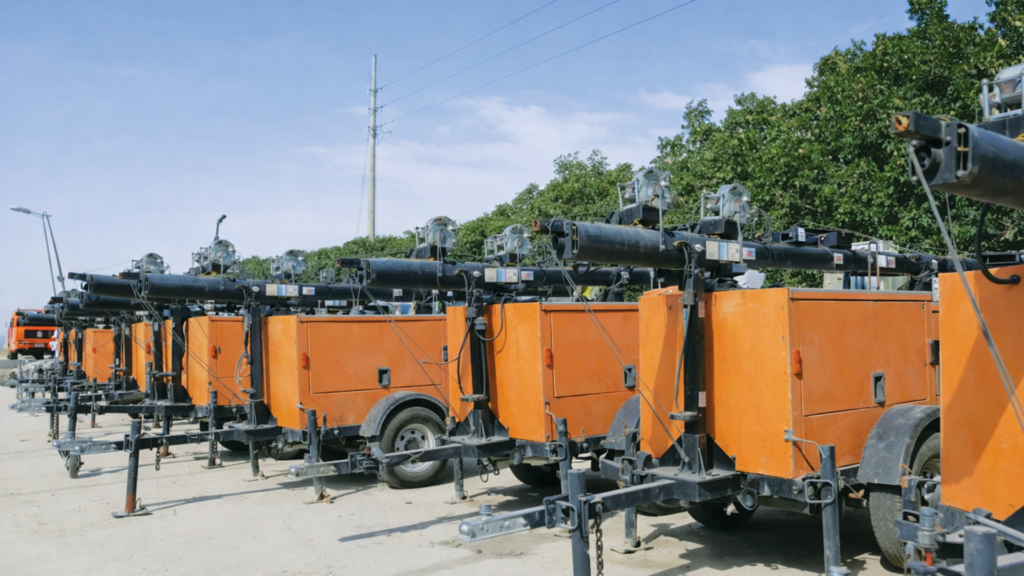
Portable equipment does not follow fixed routes or predictable cycles. A bucket may be reassigned between machines as production priorities change. A generator may remain staged longer than planned as timelines shift. A trailer may move through multiple jobsites before returning to a yard. A roll off container may stay in place simply because no signal exists to trigger its retrieval.
These assets are critical to operations, yet they often exist outside the primary systems designed for vehicles or major capital equipment.
The quiet cost of assumption
The result is rarely dramatic failure. It is something quieter. It is assumption.
Teams assume a set of attachments is still on the original machine. They assume a generator is staged and available. They assume a trailer was returned to the yard. They assume a dumpster has been emptied on schedule.
Movement creates friction. Every branch transfer introduces a handoff. Every delayed project extends dwell time. Every portable asset sitting idle represents tied-up capital that could be deployed elsewhere.
scale turns movement into a blind spot
In rental operations, this shows up as equipment that remains on rent longer than expected or falls off billing cycles. Heavy equipment attachments may sit on a job site long after the primary machine has moved. Generators may be staged early and forgotten while another project rents similar equipment externally.
In construction and oil and gas, portable equipment is frequently mobilized ahead of schedule to avoid delays. When timelines shift, those assets often stay in place without visibility into how long they have been there. In mining and rail maintenance, buckets, skids, and support equipment move between sites based on production and maintenance windows, creating complex transfer patterns that are difficult to track manually.
None of these scenarios reflect poor management. They reflect operational scale.
As organizations grow across regions and manage hundreds or thousands of buckets, generators, trailers, skids, and waste assets, complexity increases. What worked at 50 assets does not work at 500. What worked at 500 begins to strain at 5,000.
when movement become measurable
Operational maturity with portable equipment typically evolves through stages.
- Where is it?
- How long has it been there?
- Who moved it and why?
- What does this movement tell us about how we deploy capital?
When portable equipment becomes part of the data ecosystem, organizations begin to see patterns instead of isolated movements. They see dwell time clusters that reveal staging inefficiencies. They see cross-branch transfer trends that signal imbalance in asset pooling. They see underutilized trailers in one region while another region rents externally.
For a rental business managing heavy equipment attachments across multiple branches, this might mean identifying which asset classes consistently overperform in one market and underperform in another. For a construction operator with hundreds of generators and trailers, it may reveal that certain jobsites consistently hold equipment longer than scheduled. For a waste management operation, it can clarify container placement cycles and pickup timing.
visibility changes behavior which changes outcomes
The insight goes beyond location.
Portable equipment visibility exposes the quiet cost of idle time. It provides objective data to support billing accuracy, procurement timing, and redistribution strategies. It turns anecdotal conversations into measurable decisions.
It also changes field behavior. When movement is visible, transfers become more intentional. When dwell time is tracked, staging becomes more precise. When utilization is measured, capital planning becomes more disciplined.
Portable equipment may not be the largest line item on the balance sheet. But it is often the most dynamic. It moves between projects, branches, and customers more frequently than almost any other asset category.
Measuring what moves the most often is not about adding oversight. It is about reducing friction across the asset lifecycle. It is about replacing assumption with clarity.
And in industries where execution depends on having the right equipment in the right place at the right time, that clarity becomes a competitive advantage.
Schedule a demo to see how portable equipment visibility improves utilization, billing accuracy, and capital deployment.
Disclaimer: This story is auto-aggregated by a computer program and has not been created or edited by budgetbuddy.
Publisher: Source link
Publisher: Source link