
‘Most young Africans I meet are not mourning the loss of aid, but they’re questioning why it took so long to reckon with its fragility’
In this wide-ranging conversation, Dr Amber Murrey, a scholar of anti-imperial geographies and co-author of Learning Disobedience: Decolonizing Development Studies, speaks with Elizabeth (Liz) Grossman Kitoyi, founder of Baobab Consulting and a development practitioner with two decades of experience in Senegal, Malawi, New York, Washington DC, and elsewhere.
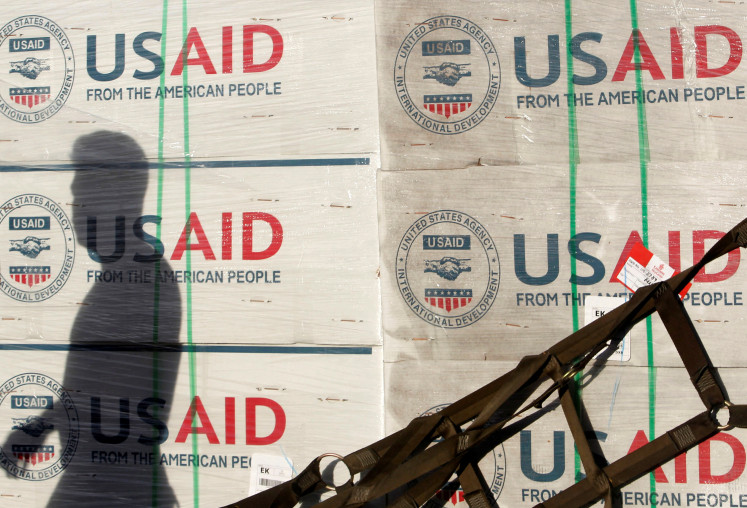
In this conversation, they explore the historical dismantling of USAID as a political and narrative project with profound implications for how Africa is positioned within US policy. This political project ultimately led to the dissolution of Liz’s own work with USAID. Drawing on Murrey’s longstanding critiques of the epistemic hierarchies embedded in the development industry, the discussion surfaces the structural dependencies hardwired into donor-driven systems and the contractor ecosystems that delimit the very meaning of ‘reform’. Yet, as Grossman Kitoyi reflects, there are also central spaces of African agency where young people, educators, and innovators are envisioning futures no longer tethered to aid’s fragile architectures. What unfolds is a shared call for narrative sovereignty, radical humility, and forms of development rooted in solidarity.
AM: Before we dive into the politics of aid today, Liz, would you briefly describe the arc of your work over the last decade or so, and the perspectives, commitments, and responsibilities you bring from your experiences of engaging across education, communications, and development institutions?
EGK: My career began with a research fellowship from Northwestern University, where I studied ICT and youth engagement in Cameroon. That early work exposed me to how young Africans were using technology not just for education, but for economic mobility and civic participation. I then became an International Baccalaureate teacher in Dakar, Senegal, which deepened my understanding of education as both a policy and a communications challenge. Wanting to bridge those worlds, I pursued a master’s in International Education Policy at Harvard to explore how storytelling, systems design, and entrepreneurship intersect in shaping social impact.
After Harvard, I returned to Senegal to join Tostan as a Senior Strategic Relations Expert, helping build a social enterprise model to generate income for the organization through training programs. That experience led me to found Baobab Consulting, a bilingual strategy and communications firm dedicated to elevating African voices and connecting the continent’s leaders and institutions to global platforms. Through Baobab, I’ve worked with leaders such as Joyce Banda and Ameenah Gurib-Fakim, supporting their advocacy and storytelling efforts to ensure African perspectives are heard on the world stage.
I have also worked at the African Development Bank and within the White House National Security Council’s Prosper Africa initiative, bringing my grassroots and entrepreneurial perspective into global policy spaces. Over time, I’ve come to see entrepreneurship not just as a professional choice but as a form of resilience, the safest and most empowering way to build systems of impact that can outlast political and funding cycles.
AM: During his time as an advisor to the US special task force, Department of Government Efficiency or DOGE, Elon Musk called USAID a ‘criminal organisation’. US President Donald Trump critiqued USAID as ‘not aligned with American interests’ and ‘run by a bunch of radical lunatics’. In this way, the 2025 restructuring of USAID has been described as more than an administrative decision, but as a profoundly political project. What has this moment revealed to you about the narratives, interests, and domestic power struggles that shape US development policy?
EGK: In April 2024 I joined the Secretariat of Prosper Africa—a White House National Security Council initiative hosted under USAID focused on expanding trade and investment between the U.S. and African nations. Prosper Africa started in 2019 under the first Trump Administration. In the months leading up to the administration change, our team prepared as most federal initiatives do: reviewing language, adjusting messaging, and ensuring our materials reflected the priorities of the incoming administration. We removed certain “buzzwords” from our website and worked to maintain continuity so our partnerships and programs could keep moving forward.
When the broader restructuring of USAID began, it reflected not only a shift in policy but also an experiment in redefining how government agencies operate. In many ways, USAID served as a testing ground for a new model of governance that sought to streamline operations and question traditional approaches to foreign assistance. From my vantage point, it underscored how communication, perception, and policy are intertwined, and how vital it is for government institutions to clearly convey their value to both domestic and international audiences.
At the same time, the dismantling revealed a deeper paradox. Many Americans celebrated USAID’s demise because they didn’t understand what it actually did, or how it benefited them. As a communicator, I view that as a fundamental failure of strategic communication. While regulations limited USAID’s ability to promote itself domestically, this left a vacuum that others filled with misinformation. The average voter saw USAID as wasteful foreign spending, not realizing that U.S. farmers, contractors, and logistics companies were among its biggest beneficiaries. Food aid programs, for instance, relied on crops grown in the Midwest and shipped overseas—meaning the so-called “foreign aid” budget was also supporting American jobs and agribusiness.
So, when the directive came to dismantle USAID, it wasn’t just policy, it was narrative. The agency became an easy political target precisely because it had failed to tell its own story. In that sense, its downfall was as much about communication as it was about ideology.
AM: What do the recent US and UK aid contractions reveal about the structural vulnerabilities created by donor-driven education systems? How are African organizations and leaders re-imagining models that reduce exposure to external political cycles?
EGK: For local actors, these cuts are existential. Many African education initiatives rely on sub-grants that originate in Washington or London. When those pipelines vanish, so do teacher training programs, girls’ scholarships, and community-level innovation. It has also created a wave of unemployment in developing countries, with many Foreign Service Nationals (locally hired U.S. Government agents) now looking for work.
Yet I’ve also seen resilience emerge. Africa organizations are forming South–South partnerships, leveraging diaspora talent, development banks (AFDB, BOAD, Afreximbank) and private African philanthropy. In some ways, the shrinking of the old aid ecosystem is forcing us to design one that is more autonomous and contextually grounded.
AM: Ilias Alami (2021), in an interview with Developing Economics, argues that development finance is structured to serve particular coalitions of power. He notes that development banks are often ‘run ‘professionally’ by technocrats, management consultants, or former bankers… mimic the practices and organisational goals of comparable private-sector entities… adopting ‘modern risk management practices’, ‘effective governance frameworks’, and so on.’ For Alami, these reforms are not neutral technical upgrades but part of a broader project to domesticate and discipline state-led development in the interests of private finance. With this in mind, I wonder: from your vantage point, were the constraints on reform inside USAID primarily bureaucratic, or were they rooted in deeper political-economic structures, such as the contractor ecosystem and the interests it has come to represent?
EGK: There was absolutely a need for reform. Over the years, a whole ecosystem developed around USAID contracting, companies based in Washington whose primary business model was simply winning USAID contracts. Many of these firms became experts in the procurement process rather than in actual development impact. Their success at a corporate level was measured not by community outcomes but by how effectively they could secure the next award.
Even with USAID’s extensive oversight and compliance mechanisms, wasteful spending persisted. Too often, decisions about who got funded came down to one or two individuals with discretionary power, reinforcing networks of access rather than merit.
Reform was both urgent and possible, but it should have been approached with greater empathy for the people working within the system who genuinely wanted to make a difference, and for the local partners who bore the brunt of abrupt shifts. Bureaucratic overhaul without human understanding risks reproducing the same inequities under a new label.
AM: Scholars, activists, and practitioners have long argued that the paradigm of international development reproduces hierarchies of knowledge, power, and value. A few years ago, I co-authored a book with my colleague, Patricia Daley, Learning Disobedience: Decolonizing Development Studies. We argued that these hierarchies are not accidental but are foundational to the development industry and development studies as a field of thought: they are sustained through pedagogies, institutional cultures, and epistemic regimes. Educational pedagogies and everyday practices of development can normalize obedience, deference to donor agendas, metrics, and categories; and render disobedience, contestation, and self-definition as illegible or dangerous. From your experience, where do you see these hierarchies most visibly reproduced? Where are they being meaningfully contested in African-led initiatives?
EGK: It’s a valid critique—and one I’ve always shared. I have long been against the traditional development narrative. Having spent significant time living in West Africa, I witnessed firsthand the real stories of growth, ingenuity, and resilience that are often ignored in donor frameworks. Yet, I also saw how much of the money intended for “development” never reached the ground, absorbed instead by overhead and consulting fees in Washington or European capitals. Only a small fraction trickled down to the communities meant to benefit.
That’s largely why I was drawn to serve my country at Prosper Africa. It represented a rare acknowledgment within the U.S. government that trade and investment,not aid, should drive the future of U.S.–Africa relations. The initiative’s focus on two-way partnerships, where both sides benefit, reflected a shift toward mutual prosperity rather than charity. That vision of dignity, agency, and shared growth is what called me to serve.
Today, my work continues to challenge those old paradigms. Through communications and storytelling, I aim to center African leadership, expose where power still resides, and help build a new narrative of partnership, accountability, and self-determination.
AM: Among the young people and leaders who you work with, how are contractions within international development aid reshaping political imaginations? By this I mean political imaginations about autonomy and the kinds of economic futures they want to build beyond donor dependency?
EGK: The reactions have been mixed with confusion, fear, but also a growing sense of clarity. When the Stop Work Order came in January, many entrepreneurs and implementing partners were genuinely shaken. I remember calls and messages from across the continent, people scrambling to understand what would happen if their grants were suddenly cut or if they didn’t receive their next paycheck. For those who had built livelihoods around U.S.-funded programs, it was more than an administrative pause; it was a rupture of trust. The U.S., long positioned as a reliable business and development partner, lost credibility overnight.
At the same time, the shock revealed something deeper: how dependent parts of Africa’s innovation and social enterprise ecosystem had become on external financing. Most young Africans I meet are not mourning the loss of aid, but they’re questioning why it took so long to reckon with its fragility. Many are now channeling that uncertainty into creativity: launching venture studios, building climate-smart businesses, and expanding the creative economy without waiting for donor approval.
Their demand is not for more grants, but for fairness : access to capital on equitable terms, stronger intellectual property protections, and trade policies that actually enable African value creation. Their frustration isn’t about reduced funding; it’s about the hypocrisy of systems that preach partnership while maintaining structural barriers. What I see emerging now is a new generation redefining partnership on their own terms—rooted in dignity, innovation, and independence.
AM: You are describing a charity-based development paradigm that is outdated, paternalistic, and which has often been counterproductive. In today’s geopolitical sphere, what do you think a genuinely anti-imperial internationalism looks like in practice? And what would need to be dismantled or re-built for it to emerge? Are practitioners continuing to speak about neocolonialism or anti-imperialism?
EGK: Absolutely—but it requires a radical humility. Solidarity begins with listening and with redistribution of decision-making power. It means African institutions co-owning research agendas, local media telling their own stories, and donors accepting accountability to the people they claim to serve. True internationalism must look more like mutual aid and less like managed benevolence.
AM: Tell me more about what you have called ‘radical humility’; what does it look like for development practitioners, in practice, and particularly in a geopolitical moment characterised by a return to force, militarism, harder borders, and consolidations of centralised power? How do you see your work contributing to collective efforts to re-shape who defines development, whose knowledge counts, and whose interests are centered?
EGK: I see myself as a bridge-builder, and as a challenger of old bridges that no longer serve us. Post-USAID, I’m focused on redefining what collaboration, power, and voice look like in the global development and education space. Through Baobab Consulting, I work with governments, DFIs, and social enterprises to communicate on their own terms, grounded in African realities, multilingual, data-driven, and unapologetically ambitious. Our work goes beyond messaging; it’s about reclaiming the right to define success and impact from within the continent.
For too long, Africa’s most transformative ideas have been filtered through the lens of external validation. My mission is to change that. I call this narrative sovereignty, a shift from “development” to co-creation, where African institutions, entrepreneurs, and thinkers lead the storytelling about their own futures. That means amplifying research, elevating local expertise, and ensuring that those historically spoken for are now speaking to the world, on equal footing.
I also see my role as nurturing the next generation of communicators and strategists who will carry this work forward. The future of development communication must be led by, collaborative, confident, and globally fluent African voices. The next chapter of global education will not be about aid or charity; it will be about shared learning, equity, and transformation.
AM: Given the concerns that animate the Developing Economics community—from neoimperialism and power, to inequality and alternative imaginaries—what do you hope we take from your experience? And what emerging African-led practices and ideas do you believe we should be paying closest attention to in the years ahead?
EGK: What I hope readers take from my experience is that African agency is not emerging—it has always been there. What’s changing now is that more people are finally paying attention. Having worked across education, communications, and development institutions, I’ve seen how much of the global system still operates on the assumption that ideas, expertise, and legitimacy flow from North to South. But that model is breaking down.
Across the continent, I see African-led practices redefining what development looks like in real time: social enterprises that generate profit and impact, creative industries that are building new cultural economies, content creators documenting their own realities and education initiatives rooted in local knowledge systems rather than imported curricula. These movements are rewriting the rules of participation, showing that sovereignty is not just political, but narrative, economic, and intellectual.
Liz Grossman Kitoyi is a co-founder of Baobab Consulting. She has been named on ForbesNext1000 list. In November 2025, Liz was a guest lecturer for Murrey’s course, Critical Development Geographies, which Murrey co-teaches with Professor Patricia Daley at Oxford’s School of Geography and the Environment. Her recent op-ed in Africa.com evaluates shifting economic policies between African countries and the US in the context of escalating economic and climate risks, including tariffs.
Amber Murrey is an Associate Professor of Political Geography at the University of Oxford and Mansfield College, Oxford. She is the editor of A Certain Amount of Madness: The Life, Politics and Legacies of Thomas Sankara, co-author of Learning Disobedience: Decolonizing Development Studies, and the Editor-in-Chief of African Geographical Review.
Disclaimer: This story is auto-aggregated by a computer program and has not been created or edited by budgetbuddy.
Publisher: Source link
Publisher: Source link