
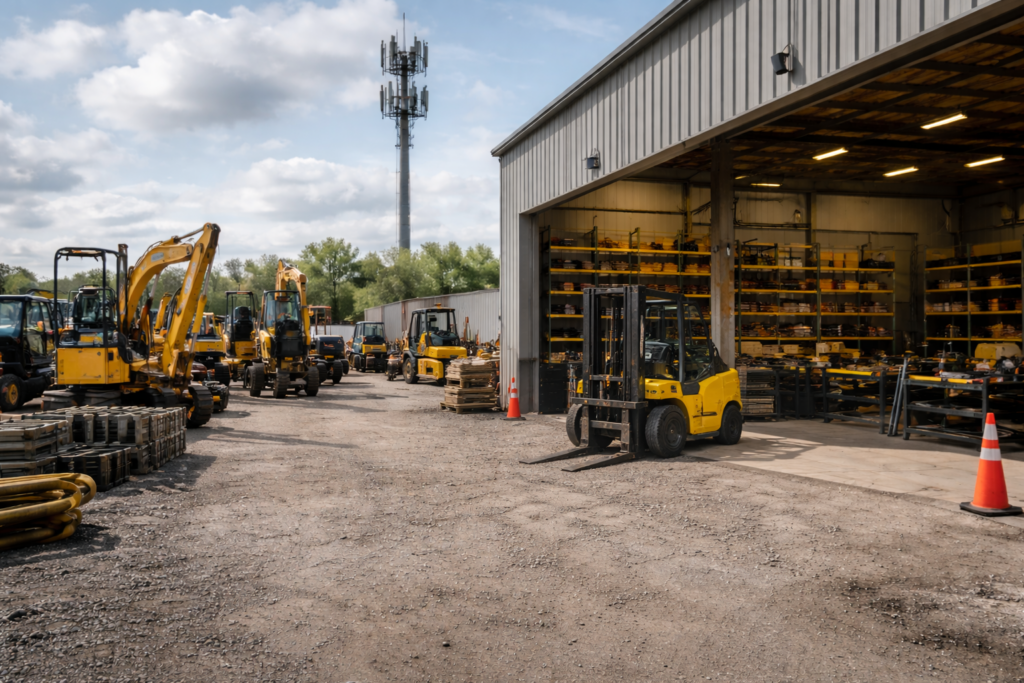
GPS Visibility Without Wiring or Expensive Satellite Costs
Cellular asset tracking works by using GPS satellites to determine where equipment is located and cellular networks to securely send that location data to cloud software teams can access from anywhere. For organizations managing non-powered equipment, it provides reliable visibility without wiring, external power sources, or expensive satellite connectivity.
Portable equipment moves constantly between yards, vendors, and job sites. Generators, attachments, containers, totes, and rental assets are reassigned, staged, or stored across multiple locations, often without consistent documentation. When visibility breaks down, teams experience familiar challenges: missing equipment, inaccurate inventory counts, unnecessary rentals, and time lost searching across active projects.
Cellular tracking helps close that gap by making everyday equipment visible and measurable at scale.
What is cellular asset tracking?
Cellular asset tracking combines GPS positioning with low-power cellular communication to monitor equipment that operates independently from electrical systems.
Battery-powered tracking devices install directly on equipment and operate for years while sending periodic location updates to a cloud-based platform.
Organizations commonly deploy cellular tracking on:
- Portable equipment
- Construction attachments
- Rental inventory
- Totes and returnable containers
The result is continuous asset visibility without relying on vehicle wiring or operator input.
How cellular GPS tracking works
Each device communicates with GPS satellites to calculate its location coordinates. This process works similarly to smartphone navigation, but industrial trackers are optimized for long-term deployment in harsh operating environments.
Smart power management preserves battery life
Because non-powered equipment does not move constantly, trackers conserve energy by remaining in a low-power sleep state.
Devices typically wake when:
- Movement is detected
- Scheduled reporting interval occurs
- Alert condition is triggered
If cellular signal temporarily drops, many devices store location data and transmit it once coverage returns.
Cellular networks send data to the cloud
Instead of relying on satellite transmission, cellular trackers send small data packets through nearby towers using IoT cellular networks such as LTE-M.
Because only small amounts of information are transmitted, connectivity costs remain manageable even across large asset inventories while maintaining reliable coverage across most industrial regions.
Software turns data into operational visibility
Once transmitted, asset data appears inside a centralized platform where teams can quickly understand:
- Where equipment is located
- Movement history
- Utilization trends
- Unexpected or after-hours movement
Operations teams, asset managers, and leadership can access the same information through desktop dashboards or mobile applications.
Why cellular tracking works for non-powered assets
- No wiring or operational downtime- Battery-powered trackers install using bolt-on mounting or industrial adhesive backing without electrical integration. Installation can often occur during routine inspections or maintenance cycles without disrupting operations.
- Affordable at Scale- Cellular connectivity typically costs less than satellite communication, allowing organizations to expand tracking beyond high-value equipment and into everyday operational assets.
- Long Battery Life- Efficient power management allows many trackers to operate for multiple years depending on reporting frequency and asset activity.
- Better Equipment Utilization- While theft recovery remains important, many organizations see the greatest value through operational efficiency. With tracking, teams are able to redeploy idle equipment faster, improve yard inventory accuracy, and understand usage patterns across projects.
Over time, historical data supports better planning, budgeting, and resource allocation.
Cellular vs. satellite tracking
Satellite tracking remains valuable for offshore deployments or extremely remote environments with limited infrastructure.
For most construction, utilities, rental, and industrial operations operating near transportation or service corridors, cellular tracking provides a strong balance between reliability, simplicity, and cost efficiency.
Frequently Asked Questions
How long do cellular asset tracker batteries last?
Battery life varies based on reporting frequency and movement activity. Many industrial trackers operate for multiple years using internal batteries.
Does cellular tracking work in rural job sites?
Modern LTE-M networks provide broad coverage across most industrial regions. Devices can store location data during temporary signal loss and transmit it once connectivity returns.
Do non-powered assets require wiring?
No, most Geoforce cellular asset trackers operate independently and do not require electrical connections allowing them to operate on both powered and non-powered equipment.
Is cellular tracking cheaper than satellite tracking?
In most cases, cellular tracking has lower hardware and recurring service costs, making it practical for large asset deployments.
What equipment can be tracked?
Organizations commonly track generators, attachments, containers, rental equipment, totes, and other portable or non-powered assets.
Schedule a demo to see how cellular GPS trackers can expand your visibility and improve operations.
Disclaimer: This story is auto-aggregated by a computer program and has not been created or edited by budgetbuddy.
Publisher: Source link
Publisher: Source link