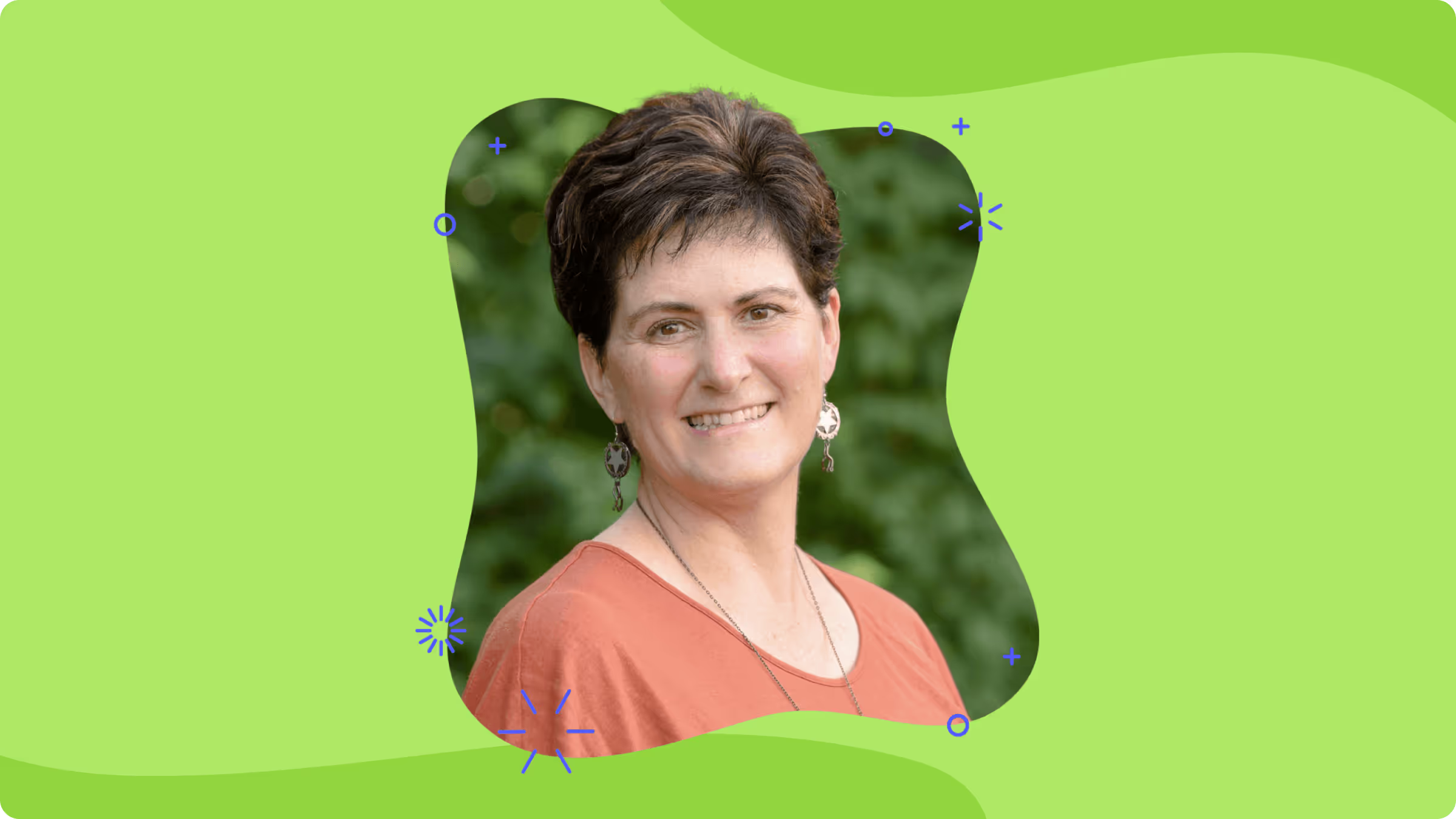
Pamela was no stranger to hard work. But no matter how much she earned, saved, or sacrificed, she always felt like she was doing money wrong.
Her money shame extended beyond numbers on a spreadsheet. This invisible weight crept into holidays and weddings, conversations with loved ones, and late nights lying awake wondering how it would all work out.
Pamela had tried everything—the apps, the courses, the so-called solutions, but nothing stuck. And over time, the voice in her head got louder: You should have figured this out by now. Why can’t you get it together? What’s wrong with you?
She wasn’t just worrying about money. She was quietly battling a deeper belief: that she would never get it right.
And yet, today? Pamela doesn’t worry about money. Not anymore.
This is how she got there.
Pamela shared her story with us through the YNAB Stories survey. If you’d like to tell your story, fill out the quick form! We can’t wait to hear about your good with money transformation.
Even when I tried everything, I still felt bad with money
When I read the beginning of Pamela’s story, her frustration practically leapt off the page. This wasn’t someone who had ignored her finances. She wasn’t floating through life unaware. On the contrary—she had been working at it. Hard. She’d read the books. Tried the systems. Signed up for the programs. She was doing more than most, and somehow still walking away feeling like a failure.
As Pamela put it: “None of these programs helped me make good decisions about money.”
And honestly? She’s not alone.
So much of the financial world is built to make you feel behind. The advice can be rigid, confusing, or just plain mean. And if you don’t fit the mold—if your life is a little messy, or your priorities don’t look like someone else’s spreadsheet—it’s easy to internalize the lie that you’re the problem.
Pamela wasn’t financially clueless. She was just exhausted. Exhausted by the shame, the second-guessing, by rice and beans-ing it, and the way every so-called solution seemed to whisper the same thing: You’re still not doing enough.
And that’s when something shifted.
Pamela began her career teaching music in public schools, but the job took a toll. In 2009, driven by a passion to teach in a different way, she left the classroom to open a music school right in the middle of the financial crisis. It was a leap of faith without a financial safety net.
She poured herself into the school, even building a side career as a seminar presenter, traveling across the country. She loved the work, but making ends meet was always a struggle.
Despite her relentless effort, the bills piled up. First a foreclosure, then bankruptcy, and finally, an IRS bill that made it clear. She needed to do something to find more financial stability. As much as she loved running her own business, she needed something more predictable so she could catch her breath and lay a more solid foundation.
Pamela returned to public school teaching in Virginia in 2013, determined to rebuild.
I spent most of my adult life, including two marriages, handling money on a wish and a prayer.
Her lowest point? When her daughter got married and Pamela couldn’t help financially like she always wanted to.
I felt ashamed. It was very hard for me to enjoy the wedding.
This is what I hate the most about money worry. It seeps into every part of your life. It forces you to make career choices you wouldn’t have made otherwise. It means you can’t support your family in the way that you want. And it carries this sense of shame as well.
I could see those negative feelings everywhere at the beginning of Pamela’s story. When you’re worried about money, it’s easy to believe there’s something wrong with you as a person. But that just isn’t true of Pamela. She just needed to learn a new skill and a new method.
Other tools helped me deal with the past, but not the future.
When she moved back to Virginia in 2013, Pamela committed to starting over, rice and beans style. She cut back on everything. She tackled her debt head-on.
It worked—up to a point. This method helped her clean up what had already happened. But it didn’t help her build anything new.
That took care of the past, but that didn’t help me with the future.
Even after making progress, she still didn’t feel confident. She had dealt with past mistakes, but she still felt like she was bad with money. And she knew she needed more than a strategy for paying down debt. She needed a new way to think about the future.
Pamela had made great progress, but she was still worried that the debt would come back. She had proven she had the discipline and the skills to change her life, but she needed a framework to help her make decisions that would mean she’d never go back.
Then I found YNAB
Enter YNAB. I immediately knew this was the answer I had been searching for.
When Pamela discovered YNAB, she jumped in with both feet. She immersed herself in all the YNAB lore. She listened to every episode of Jesse’s podcast. Took the free workshops, sometimes multiple times. It was a lot to take in, and the best way to get really good with money was to immerse herself—to internalize this new way of thinking until it was second nature.
And it was working! With YNAB, she wasn’t just cleaning up the past. She was building the future, too.
Planning for irregular bills like those that come every three months or six months or even every year was transformational.
She started making her money line up with her values. She wasn’t reacting anymore. She was deciding. In a word, she was getting good with money.
Now my money does exactly what I tell it to do.
I got good with money… and I stopped worrying.
Now Pamela is turning her shame into pride. The moment that once haunted her—watching her daughter get married without being able to help—is being rewritten with something new: contribution, generosity, and confidence.
Now, Pamela is helping her daughter pay for a second college degree “without even blinking.” The future is bright. Right now, she’s saving for a landscaping project she’s always dreamed of. She’s preparing for a lovely retirement. But most of all, she’s basking in the pride she feels when she thinks about how she handles her money. What used to bring overwhelming shame is now a source of pride.
.png)
What I love most about Pamela’s story is she didn’t give up. She didn’t settle for feeling bad with money. And she didn’t wait for someone to come fix it for her. She learned how to get good with money, and now? She never has to worry about money again.
Have you ever worried about money? You’re not alone. Get YNAB, get good with money, and never worry about money again.
FAQs
What is YNAB?
YNAB is an app that helps you get good with money so you never have to worry about money again. It helps you give every dollar a job, plan for future expenses, and break the paycheck-to-paycheck cycle. The average YNAB user saves $600 in their first month and $6,000 in their first year.
How does YNAB help you get good with money?
YNAB gives you a clear, step-by-step method so you can finally stop worrying about money. Instead of hoping things work out, you decide what your money needs to do—one dollar, one category, one month at a time. That clarity replaces stress, late-night math, and “I hope this goes through” worry with calm confidence. It’s not about perfection. It’s about finally having a system that works for you.
How do I get started with YNAB?
The easiest way is to jump into the free 34-day trial. Set up your first categories, start assigning dollars, and you’ll immediately feel more clarity and control. Need guidance? The Ultimate Get Started Guide walks you through every step.
What does the YNAB free trial include?
You’ll get full access to the app for 34 days—no credit card required. That includes the web app, mobile apps, bank syncing, and every feature. You’ll also get access to free live workshops, help docs, and a friendly support team if you need a hand.
Do I need to be good with money to use YNAB?
Not at all. Most people start YNAB because they don’t feel good with money. YNAB isn’t about being perfect, it’s about building small habits that help you feel more confident and in control. And yes, you can totally learn it.
Disclaimer: This story is auto-aggregated by a computer program and has not been created or edited by budgetbuddy.
Publisher: Source link
Publisher: Source link