For years, real-time asset tracking was a luxury reserved for large enterprises. If you ran a small HVAC company, a regional landscaping crew, or a family-owned construction outfit, the idea of “knowing where every ladder, generator, or pallet of materials is at any given moment” sounded like something only a Fortune 500 logistics team could afford. GPS trackers cost too much per unit, cellular data plans added up fast, and the software platforms were built for fleets of thousands, not a dozen trucks and a storage yard.
That equation has changed. With Link Labs now part of Geotab, and the recent integration of the Hubble Network into the AirFinder platform, small businesses finally have access to the same caliber of asset visibility that used to require enterprise-level budgets — without the enterprise-level price tag.
The Small Business Problem: Losing Money on Things That Aren’t Vehicles
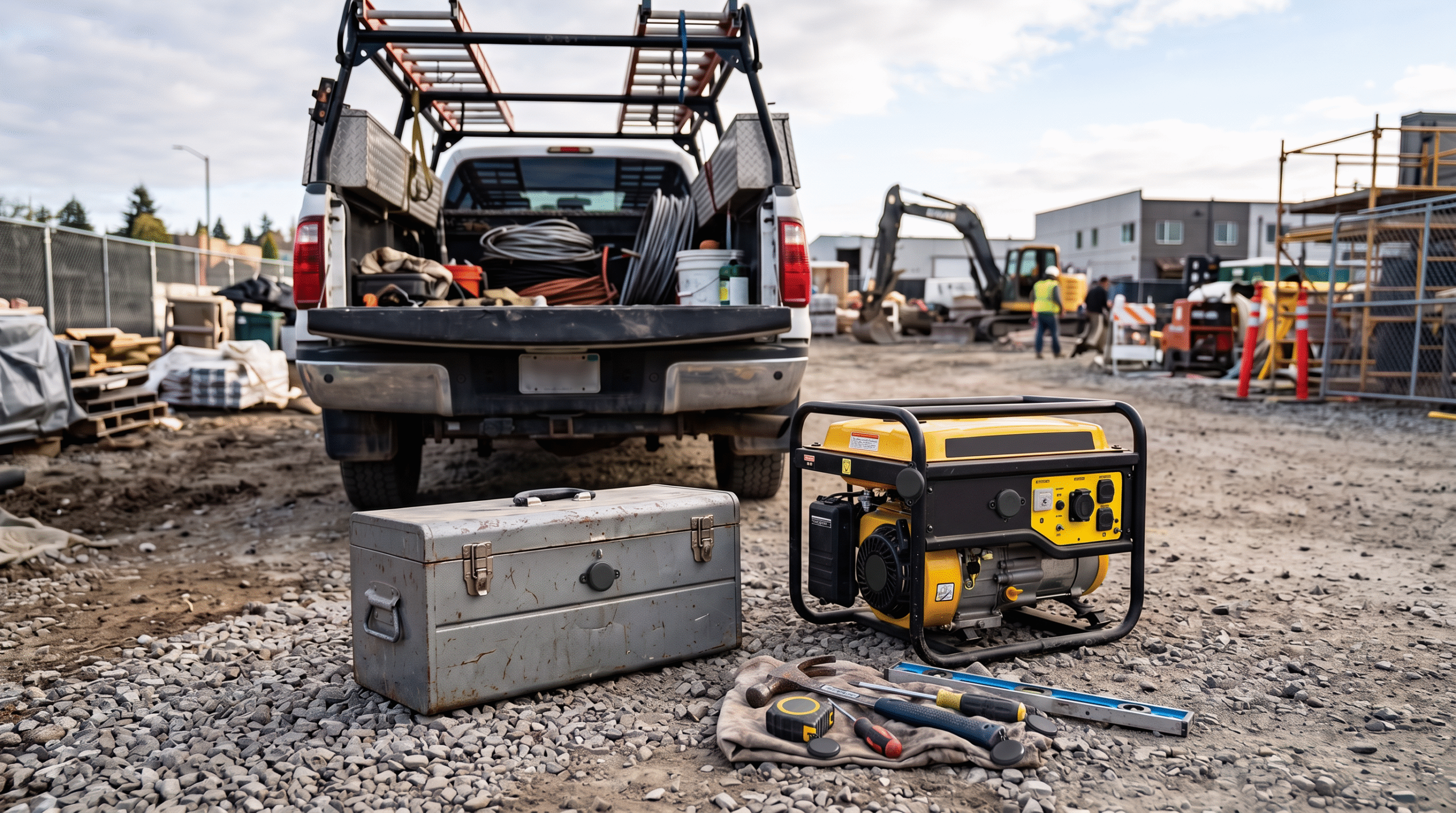
Most small businesses that adopt telematics do it to track trucks and vans. But vehicles are rarely where the money quietly disappears. It’s the drill left on a job site, the pallet of materials that never came back from a delivery, the portable generator that “someone” borrowed and never returned, or the toolbox that walked off a work truck overnight.
For a small business with tight margins, these losses aren’t rounding errors — they’re real hits to the bottom line. A single stolen compressor or a missing set of specialty tools can wipe out a week’s profit. And because small businesses don’t have fleet managers dedicated to inventory reconciliation, these losses often go undetected until it’s time to restock and someone asks, “Wait, didn’t we already buy three of these?”
Small Asset Tracking, Now Built Into Geotab
Earlier this year, Link Labs and Geotab launched a small asset tracking integration that lets Bluetooth Low Energy (BLE) tags be read directly by Geotab GO10 devices and the IOX-BT dongle — hardware many small fleets already have installed. Attach a BLE tag to a tool, a pallet, a generator, or a piece of equipment, and as your vehicle drives near it, the tag is automatically detected and the data flows into the Geotab platform you already use every day.
For a small business, this is huge. It means no new dashboard to learn, no separate contract to manage, and no need to retrofit your trucks with additional hardware. Your existing Geotab-equipped vehicle becomes the tool that finds your equipment for you, automatically, as part of its normal route.
Hubble Network: Removing the “Only Inside My Own Fence” Limitation
Here’s where it gets even better for small operators. Bluetooth tags have always been affordable, but their Achilles’ heel was range — they needed a nearby reader (like your vehicle or a facility gateway) to pick up their signal. If a tool or piece of equipment left your yard and wasn’t near one of your own vehicles, it effectively vanished.
Link Labs’ partnership with Hubble Network solves that problem. Hubble operates a global network of more than 90 million terrestrial Bluetooth gateways. That means when a tagged asset leaves your job site, your yard, or your delivery route, there’s a good chance it’s still being detected — not by your own hardware, but by gateways already out in the world. That location and sensor data flows straight back into AirFinder, giving you visibility even when your asset isn’t anywhere near your own trucks.
For a small business, this eliminates the need to build your own tracking infrastructure. You don’t need gateways in every warehouse or a tracker on every vehicle that might pass by an asset. The visibility comes to you.
Why This Actually Matters for Small Business Economics
The reason this combination — Geotab hardware you already own, plus Hubble’s global BLE detection network — is such a big deal for small businesses comes down to simple math:
No GPS or cellular fees per tag. BLE tags don’t need SIM cards or data plans. For a business tracking dozens of tools, pallets, or pieces of equipment, that’s the difference between a viable program and one that never gets budget approval.
Lower hardware costs. A BLE tag costs a fraction of a cellular/GPS tracker. Small businesses can now afford to tag items that were previously “too cheap to track” — a leaf blower, a set of ladders, a stack of pallets — because the tag itself doesn’t erase the ROI.
Longer battery life, less maintenance. Small businesses don’t have IT departments to manage device fleets. BLE tags, without GPS or cellular radios draining power, can run for years, meaning less time spent swapping batteries and more time running the business.
Zero new workflow. Because tags are read by hardware you’re likely already using (Geotab GO10 and IOX-BT), and now supplemented by a global detection network you don’t have to build or maintain, there’s nothing new to install, configure, or babysit.
What This Looks Like in the Real World
Picture a small landscaping company with five trucks. Every mower, trimmer, and piece of equipment gets a BLE tag. As trucks move between job sites, equipment is automatically logged. If a mower gets left behind or ends up on the wrong truck, the business knows immediately — no end-of-day scavenger hunt required. And if a tool disappears entirely, there’s now a real chance the Hubble network picks it up somewhere else in the city, giving the owner a fighting chance to recover it instead of writing it off.
Or consider a small electrical contractor managing a shared tool crib across three job sites. Instead of guessing which crew has the good drill press, tags tell them exactly where it is — whether that’s confirmed by their own trucks or by a Hubble gateway across town.
The Bottom Line
Small businesses have always had to do more with less — less staff, less capital, less room for error. The combination of Geotab’s existing fleet hardware and Link Labs’ Hubble-powered BLE tracking finally brings enterprise-grade asset visibility down to a price point and complexity level that makes sense for a five-truck operation, not just a five-thousand-truck one.
If lost tools, missing equipment, or unreturned pallets are quietly eating into your margins, it may be time to see what small asset tracking can do for your business.
Contact us today to learn more.
Disclaimer: This story is auto-aggregated by a computer program and has not been created or edited by budgetbuddy.
Publisher: Source link
Publisher: Source link