
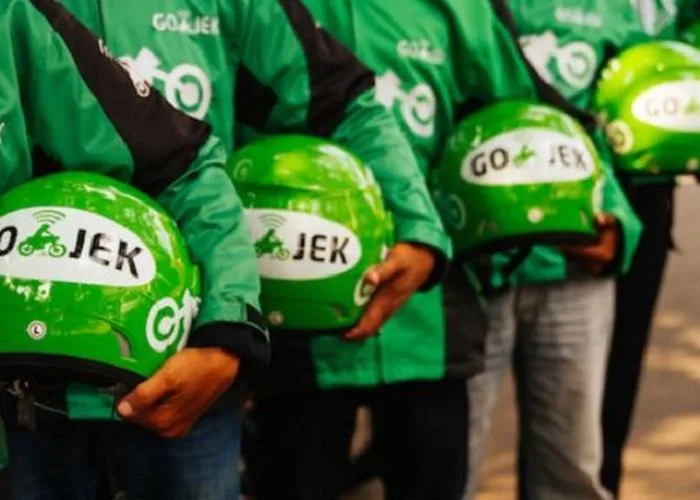
Somewhere in the state of Maharashtra, a cotton farmer took his own life after years of compounding debt and crop failure. Across India, this tragedy is not rare. The National Crime Records Bureau recorded 11,290 farmer and farm-labourer suicides in 2022—roughly one death every hour—with debt consistently identified as a leading cause (Down to Earth, 2023). In Sulawesi, Indonesia, villages are being cleared to make way for nickel smelters that supply the batteries of the global electric-vehicle boom. Workers at the Indonesia Morowali Industrial Park earn higher wages than they would in farming, but face fatal furnace explosions and respiratory damage as recurring occupational risks (Campbell & Lee, 2024; Global Witness, 2025). And on the streets of Jakarta, Yogyakarta, and Surabaya, a new population of electric motorcycle drivers pedal their way through twelve-, fourteen-, sixteen-hour days (Novianto, 2025a), servicing loans they never chose and rental fees that can never be fully paid.
These are not three unrelated stories. They are distinct moments in a single global process: the uneven, extractive, and deeply political reorganisation of labour under the banner of the green transition. In this article, I want to argue, drawing on my fieldwork with electric-vehicle (EV) platform drivers in Indonesia, that this reorganisation has produced what I call a regime of green debt bondage—a configuration in which ecological transition, platform governance, and financialised credit converge to bind workers to perpetual labour without delivering the promised climate dividend.
Debt bondage is most often associated with pre-capitalist or early-capitalist forms of coercion: the indentured plantation worker, the brick-kiln labourer, the trafficked domestic servant (Breman, 2007; Brass, 2011; LeBaron, 2014). Its reappearance inside the shiny, algorithmic, climate-friendly infrastructure of platform capitalism should unsettle us. It signals not a rupture from coercive labour regimes, but their transformation into more diffuse and systemically embedded forms. What I call green debt bondage refers to a condition in which workers are not only tied through credit, rental schemes, and platform deductions, but are also structurally compelled to remain within precarious work due to the absence of viable, decent employment alternatives.
In this regime, indebtedness does not operate in isolation; it interacts with broader labour market constraints that limit workers’ capacity to exit. Debt becomes a mechanism that deepens this entrapment—pushing drivers to work longer hours, accept worsening conditions, and absorb greater risks simply to service obligations they cannot easily escape. As such, the “greening” of transport in Southeast Asia does not merely reorganise infrastructure, but reconfigures coercion itself: embedding exploitation within both financial relations and structural labour precarity under the banner of ecological transition.
The extractive geography of a green promise
The green transition in Indonesian ride-hailing is inseparable from a wider geography of extraction. Indonesia produced more than half the world’s mined nickel in 2023, supplying battery makers such as CATL, LG, and Tesla’s upstream partners (Global Witness, 2025). This has been achieved by transforming what were once farming communities and coastal fishing villages into industrial zones of smokestacks and acid-leaching plants. Research by Global Witness (2025) and investigative reporting (Campbell & Lee, 2024) has documented land dispossession, water contamination, and a pattern of fatal accidents in these zones. Entire agrarian livelihoods have been erased so that downstream, urban, consumption-facing transport can be re-branded as clean.
At the downstream end, Gojek and Grab have pledged fully electric fleets by 2030. But because platform drivers are classified as “partners” rather than employees (Novianto, 2025c), the capital cost of electrification is not borne by the corporations making the pledge. It is pushed onto drivers through daily vehicle-rental contracts, pay-per-swap battery fees, and escalating data costs. Indonesian platform capitalism has long been characterised by what I have elsewhere called a “cheap labour regime” built on misclassification and the externalisation of work-related risks onto the individual driver (Novianto, 2025a). The EV transition does not disrupt this logic; it refits it with a sustainability badge.
The result is a strange double movement. Rural communities in Sulawesi and North Maluku lose their land and their health to feed one end of the EV supply chain. Urban drivers in Java lose their time, their bodies, and their financial autonomy at the other end. Capital accrues at every step. The workers at both ends are told, implicitly or explicitly, that their sacrifices are contributions to a shared planetary project.
How debt works inside a labour regime
To understand why this configuration has such disciplinary force, we need to take seriously the place of debt inside contemporary labour regimes. The concept of a labour regime, developed by Burawoy (1985) and subsequently elaborated within political economy scholarship, refers to the ensemble of institutions, norms, and power relations that govern how labour is recruited, disciplined, and reproduced. Classical accounts focused on the authority structures of the factory, and later on those of the global value chain. Platform scholarship has added a further dimension: the algorithmic governance of fragmented labour (Rosenblat, 2018; Veen et al., 2020; Wood et al., 2019; Novianto, 2025b). What has been comparatively neglected is how financial obligations lock workers into a regime that, formally, they are “free” to exit at any time.
Debt operates as labour discipline through several interlocking mechanisms. First, it sets a floor on required cash flow. A worker who owes a fixed monthly instalment cannot afford a lean month. They must work whatever hours, at whatever rate, are needed to cover the obligation—effectively surrendering her nominal right to refuse work. Second, debt collapses the temporal autonomy of the worker. As Lazzarato (2011) argued in his analysis of the indebted subject, borrowing mortgages present labour to future obligations: today’s fourteen-hour day is the price of last year’s medical emergency or school enrolment. Third, debt individualises responsibility. When platform tariffs fall or sewing-machine contracts collapse, it is the worker, not the platform or the factory owner, who faces the creditor. Fourth, in the platform context specifically, debt enables a vertical integration of extraction: the same corporate entity that sets tariffs also originates credit (van Doorn & Chen, 2021; Langley & Leyshon, 2021), so that whatever the worker earns flows through—and partly back into—the platform’s balance sheet.
This is why older debates about bondage and unfreedom are not just historical relics. Scholars like LeBaron (2014), Mezzadri (2017), and Bhattacharya (2018) have shown that the apparent “freedom” of the modern wage earner coexists with substantial forms of coercion through debt, deposits, and dependency. The Indonesian platform driver, who can technically log off at any time, is in practice as compelled to ride as the Vidarbha farmer is compelled to plant cotton when moneylender interest compounds at sixty per cent per year (Merriott, 2016).
Platform drivers—whose incomes are volatile, whose formal banking relationships are often thin, and whose smartphones already host the apps through which their work is organised—are an ideal target population for both licensed and unlicensed lenders. Crucially, this dynamic is not external to the platform economy itself. Companies such as Gojek and Grab have embedded lending services directly into their ecosystems: Grab, through GrabModal Narik (in partnership with Julo and Ovo), and Gojek through GoPay Pinjam. These services are marketed as solutions to drivers’ financial vulnerability—GrabModal Narik, for instance, advertises itself as “the easiest way to access cash when needed.”
Yet this framing obscures a more troubling reality. The vulnerability being addressed is not only structural, but also actively produced within what can be described as a “cheap labour regime,” where low and unstable earnings are integral to the business model. At the same time, platforms leverage drivers’ digital labour profiles—performance metrics, transaction histories, and income flows—to calibrate creditworthiness and loan limits, tightening the link between labour and indebtedness. Rather than offering a pathway out of precarity, this integration of labour management and financialisation embeds workers more deeply within it, making debt an ordinary condition of participation rather than an exceptional fallback.
The green transition as a debt amplifier
Onto this already precarious terrain, the green transition arrives not as relief but as amplification. Platform drivers are not simply burdened by debt; they are rendered vulnerable to it. When a driver’s motorcycle no longer meets the platform’s vehicle-age requirement (typically around seven years), is no longer roadworthy, and there are no savings to finance a replacement, the only viable options are to incur debt—either through credit for a new vehicle or by entering an EV rental scheme. In this sense, indebtedness emerges not as an individual financial choice, but as a structurally induced condition of continued participation in platform work.
This inability to independently reproduce the basic means of work—namely, a functioning vehicle—reflects a form of primitive accumulation within platform capitalism, where workers are separated from the conditions necessary for their own labour and are pushed into new circuits of dependency. Evidence from my research further underscores this dynamic: net earnings of platform drivers (gross income minus fuel, mobile data, depreciation, and other costs) amount to only around one-third of the minimum wage (Novianto, 2025b). Within such conditions, the shift to EV schemes does not resolve precarity but reorganises it, introducing new and continuous financial obligations—daily rental payments and battery-swap fees—that must be met before any income is realised.
Taken together with bank credit and platform-based lending, this dynamic produces what I describe as green debt bondage. All EV drivers, by default, are already embedded in forms of indebtedness through daily rental payments (IDR 40,000-55,000) and battery charging fees (IDR 15,000-30,000). However, survey data (January–March 2024, n=152 Indonesian EV drivers) shows a clear stratification within this condition: drivers who carry additional debt—such as loans from GrabModal Narik or GoPay Pinjam—work significantly longer hours, averaging around fourteen hours per day, compared to approximately twelve hours among those without such additional obligations. This difference is not incidental, but indicative of a structural relation between debt and the organisation of labour time. Additional layers of indebtedness intensify the compulsion to extend working hours, reinforcing a cycle in which financial obligation directly translates into longer and more exhaustive labour.
What makes the configuration distinctive is the way it marries two apparently separate logics. On one hand, the climate crisis is real. Urban air pollution in Indonesian cities is a genuine public-health emergency (IQAir, 2025). Nickel demand will continue to grow as the world shifts away from fossil fuels. On the other hand, the institutions mediating this shift—platform corporations, rental firms, fintech lenders, extractive industrial parks—are organised around private accumulation, not public welfare. When these two logics meet, the result is a transition that consumes labour and community resilience at both ends of the supply chain, while producing corporate balance sheets that look splendidly green.
This resonates with a growing literature on how “climate capitalism” and “green capitalism” reconstitute rather than resolve the contradictions of accumulation. Scholars working in the just-transition tradition (Barca, 2019; Stevis & Felli, 2015; Sweeney & Treat, 2018) have long warned that, in the absence of structural redistribution, environmental restructuring tends to deepen existing inequalities. What the Indonesian case adds is a particularly granular and replicable template: a technology substitution (combustion to electric) that is entirely compatible with—indeed, requires—the intensification of exploitation.
The echoes of older debt regimes
It is worth pausing on the echoes. The Indian farmer-suicide crisis, documented across decades of work by activists, journalists, and scholars (Merriott, 2016), emerged from a convergence of market liberalisation, expensive input packages marketed aggressively to marginal producers, and the retreat of public credit in favour of private moneylenders. Cotton farmers in Vidarbha and Andhra Pradesh were pulled into the promise of Bt cotton seeds and high-yield futures. When the yields failed, they were left with compounded debts to moneylenders charging effective interest of sixty per cent per year (Merriott, 2016). The suicides that followed are not reducible to debt alone—caste humiliation, mental health, and family dynamics all play roles—but debt is the thread that runs through every account.
The Indonesian platform driver is not a farmer, and his crisis has not yet produced a comparable wave of terminal acts. But the structure of his predicament is disturbingly familiar. He has been pulled into a new technological regime (EV adoption) through the combination of platform requirements and capital scarcity. That regime compounds his obligations. When the promised returns fail to materialise—because tariffs have stagnated, battery fees have risen, or an accident has interrupted his cash flow—the creditor does not disappear. The rental firm does not pause the daily fee. The fintech app continues to deduct from incoming order payments. The platform, meanwhile, accumulates the branding benefits of a greener fleet.
Agrarian political economists have long argued that capitalism does not replace older forms of coercion but recombines them (Brass, 2011). What we are witnessing in Indonesian ride-hailing is a particularly telling recombination: algorithmic management overlaid on rental-debt, overlaid on fintech credit, overlaid on a promise of climate action. The result is something new in composition, but not new in its disciplinary effect on the worker.
What would a transition without bondage require?
A transition to electrified transport in Indonesia is necessary given the climate crisis, but the core issue is not whether electrification should happen—it is about who bears the costs, who makes decisions, and who ultimately benefits. In its current form, the transition risks reproducing existing inequalities, particularly for platform drivers who remain trapped in precarious arrangements. Without addressing the underlying labor structure, electrification can simply become a new layer of burden rather than a pathway to justice.
At a deeper level, a meaningful transition must recognize the interconnected chains of extraction, labor, and capital that link local communities to global systems. From resource-producing regions to urban workers, the shift toward “green” mobility often redistributes costs onto those with the least power to resist. If these dynamics are ignored, what is presented as climate progress may in fact function as a displacement of harm—transforming longer working hours, rising debt, and deteriorating working conditions into the illusion of sustainability.
Until these structural issues are confronted, the electrification of ride-hailing will continue to operate within what can be described as a regime of “green debt bondage.” This is not merely rhetorical, but reflects a material condition in which environmental goals are achieved at the expense of workers’ livelihoods and well-being. Challenging this model is therefore not only an environmental question, but an urgent political task for labor movements across the Global South.
Arif Novianto is a lecturer at Department of Public Administration, Faculty of Social and Political Sciences, Universitas Tidar, Magelang. He is the author of Cheap Labour Regime in Platform Capitalism (Springer, 2025), and editor of the forthcoming The AI Regime of Work (Springer, 2027). @arifnovianto_id.
References
Barca, S. (2019). The labor(s) of degrowth. Capitalism Nature Socialism, 30(2), 207–216.
Bhattacharya, T. (Ed.). (2018). Social reproduction theory: Remapping class, recentring oppression. London: Pluto Press.
Brass, T. (2011). Labour regime change in the twenty-first century: Unfreedom, capitalism and primitive accumulation. Leiden: Brill.
Breman, J. (2007). Labour bondage in West India: From past to present. New Delhi: Oxford University Press.
Burawoy, M. (1985). The politics of production: Factory regimes under capitalism and socialism. London: Verso.
Campbell, M., & Lee, A. (2024, June 17). Indonesia’s deadly mining complex powering the electric vehicle revolution. Bloomberg Businessweek. Retrieved from https://www.bloomberg.com/features/2024-indonesia-sulawesi-nickel-fire/
Down to Earth. (2023, December 4). One farmer/farm labourer dies by suicide every hour in India: NCRB data. Retrieved from https://www.downtoearth.org.in/agriculture/one-farmer-farm-labourer-dies-by-suicide-every-hour-in-india-ncrb-data-93184
Global Witness. (2025). Indonesia’s “Amazon of the Seas” threatened by EV nickel rush. Retrieved from https://globalwitness.org/en/campaigns/transition-minerals/indonesias-amazon-of-the-seas-threatened-by-ev-nickel-rush/
IQAir. (2025). Interactive global map of 2025 PM2.5 concentrations by city. Goldach: IQAir.
Langley, P., & Leyshon, A. (2021). The platform political economy of fintech: Reintermediation, consolidation and capitalisation. New Political Economy, 26(3), 376–388.
Lazzarato, M. (2012). The making of the indebted man. Los Angeles, CA: Semiotext(e).
LeBaron, G. (2014). Reconceptualizing debt bondage: Debt as a class-based form of labor discipline. Critical Sociology, 40(5), 763–780.
Merriott, D. (2016). Factors associated with the farmer suicide crisis in India. Journal of Epidemiology and Global Health, 6(4), 217–227.
Mezzadri, A. (2017). The sweatshop regime: Labouring bodies, exploitation, and garments made in India. Cambridge: Cambridge University Press.
Novianto, A. (2025a). Cheap labour regime in platform capitalism. Singapore: Springer Nature.
Novianto, A. (2025b). Gamification from below as by form of resistance: Algorithm control, precarity, and resistance dynamic of Indonesian gig workers. New technology, work and employment, 40(3), 380-389.
Novianto, A. (2025c). Revisiting employment standards: Informalized formal job and bogus partnership in platform courier work. Critical Sociology.
Rosenblat, A. (2018). Uberland: How algorithms are rewriting the rules of work. Oakland, CA: University of California Press.
Stevis, D., & Felli, R. (2015). Global labour unions and just transition to a green economy. International Environmental Agreements, 15(1), 29–43.
Sweeney, S., & Treat, J. (2018). Trade unions and just transition: The search for a transformative politics. New York: Trade Unions for Energy Democracy.
van Doorn, N., & Chen, J. Y. (2021). Odds stacked against workers: Datafied gamification on Chinese and American food delivery platforms. Socio-Economic Review, 19(4), 1345–1367.
Veen, A., Barratt, T., & Goods, C. (2020). Platform-capital’s “app-etite” for control: A labour process analysis of food-delivery work in Australia. Work, Employment and Society, 34(3), 388–406.
Wood, A. J., Graham, M., Lehdonvirta, V., & Hjorth, I. (2019). Good gig, bad gig: Autonomy and algorithmic control in the global gig economy. Work, Employment and Society, 33(1), 56–75.
Disclaimer: This story is auto-aggregated by a computer program and has not been created or edited by budgetbuddy.
Publisher: Source link
Publisher: Source link